S1000D Element
This guide provides detailed instructions for using the S1000D Element in Construct, including its settings, properties, and metadata.
Overview
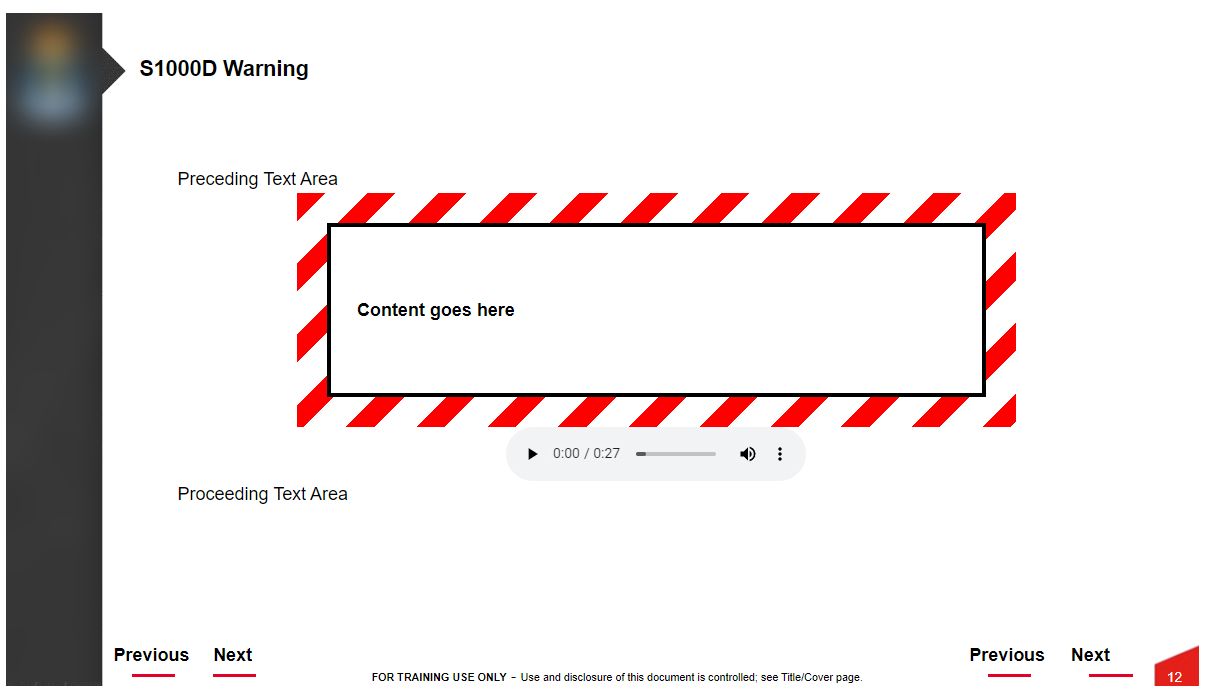
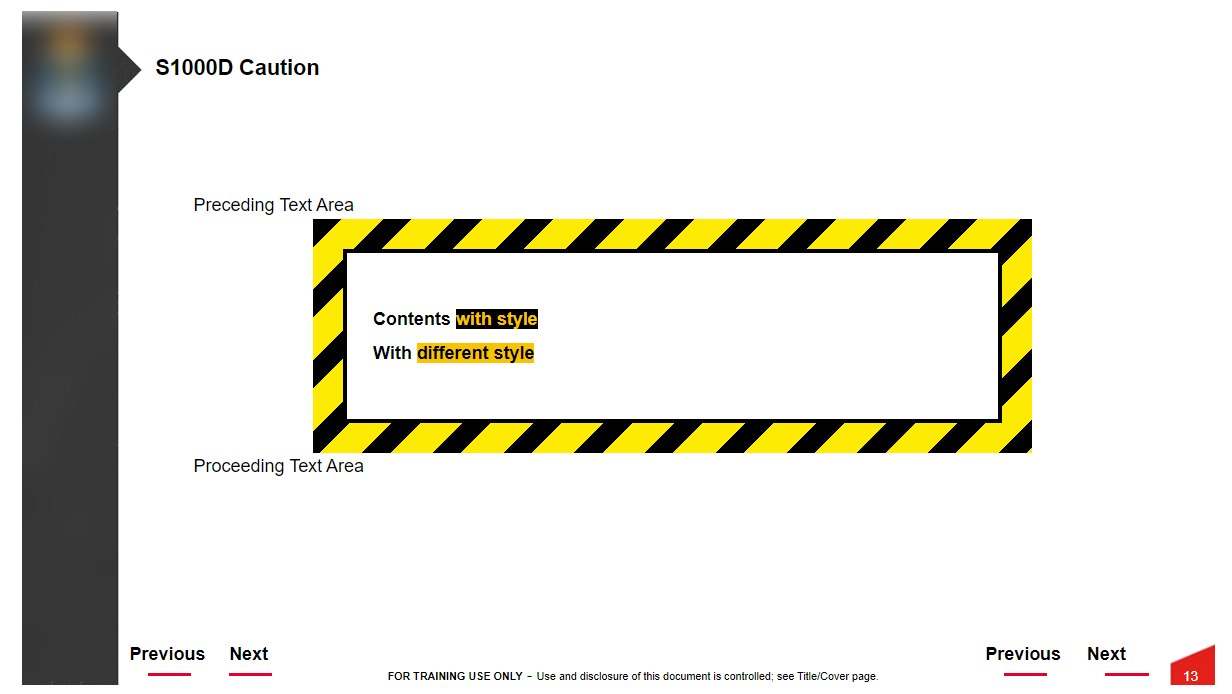
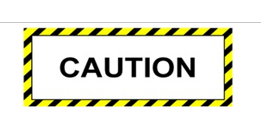
The S1000D Element is used to create styled elements such as warnings, cautions, and notes. These elements are displayed with distinctive borders in presentation and Word outputs, adhering to the S1000D standard.
Requirements
- Access to the Construct platform.
- Administrator or content editing permissions.
- Appropriate assets uploaded to the Asset Library, if needed.
Element Settings
General
Locked
The Locked checkbox, labeled Lock this and children, secures the content item and its associated nested elements.
Children refers to elements nested within others, such as:
- Elements under Key Learning Points (KLPs),
- KLPs under Teaching Points (TPs),
- TPs under Learning Objects.
 Figure 1: Locking Function
Label
The Label field creates a unique identifier for the content item, used for debugging and auditing purposes.
- Clicking the return icon resets the label to the default text: "New Component Title".
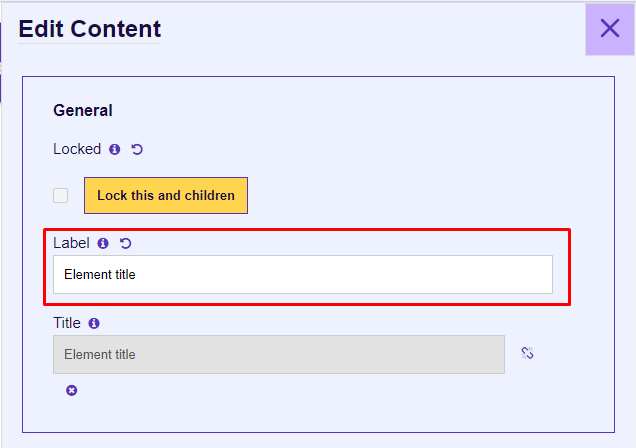 Figure 2: Element Label
Title
The Title field specifies the display title of the content item, shown in the Presentation view and Word outputs.
- By default, the title is linked to the Label. You can unlink it by clicking the chain icon.
- The Title can be left empty, and it takes the KLP Title in Presentation and Instructor/Student views.
 Figure 3: Title Input
Properties
Display Type
The Display Type dropdown allows users to specify the style of the element:
- Caution
- Warning
- Note
 Figure 4: Display Type
Preceding Text
The Preceding Text input field allows users to include introductory text before the S1000D-styled element.
 Figure 5: Preceding Text
Contents
The Contents input box defines the main text within the styled borders for the S1000D element.
 Figure 6: Contents Input
Example outputs:
- Warning:
- Caution:
- Note:
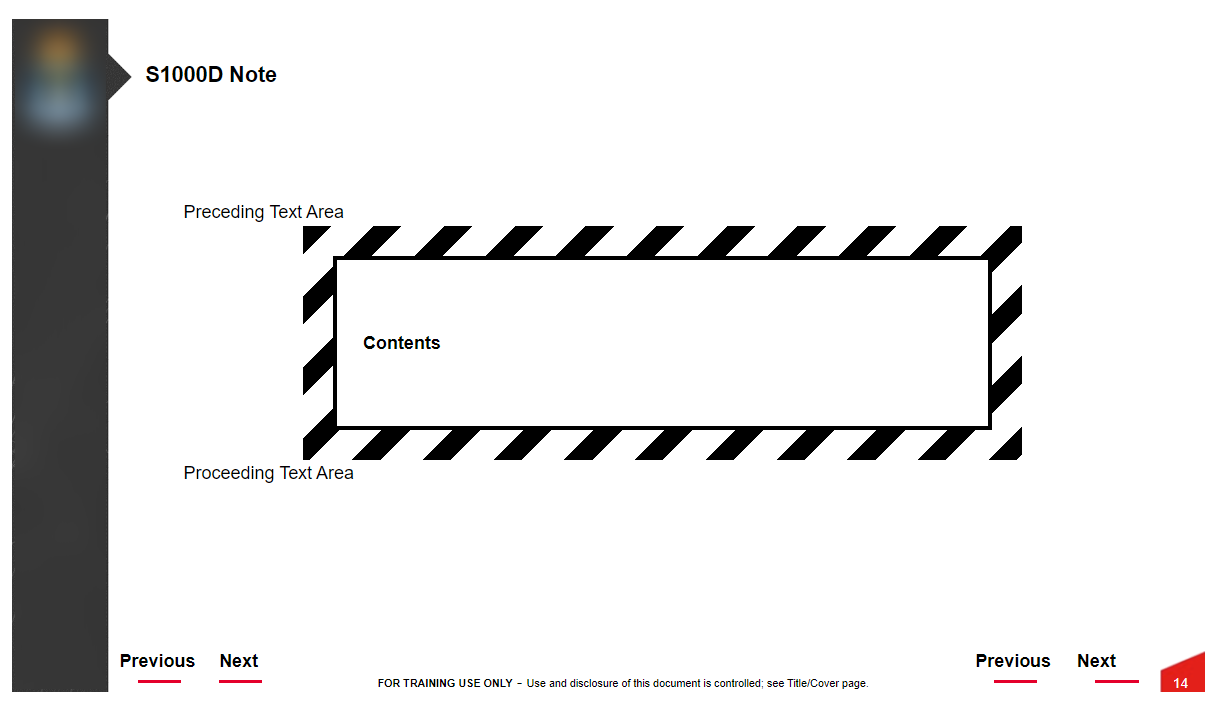
For Word outputs, the S1000D style is pre-configured and cannot be changed:
- Warning:

- Caution:
- Note:

Proceeding Text
The Proceeding Text field is for adding text that follows the S1000D-styled element.
 Figure 13: Proceeding Text Area
For CKEditor controls, refer to the CKEditor Controls.
Audio
Users can add audio to the S1000D Element:
- Click Select an Asset to choose or upload an audio file from the Asset Library.
- Select an External Asset is currently non-functional.
 Figure 14: Audio Asset
Output Types
ILT (Instructor-Led Training)
When ILT is selected, users can specify ILT Settings:
- Instructor: Displays the element in the instructor presentation window (text and list components only).
- Student: Displays the element in the student presentation window.
 Figure 7: ILT Output Types
Word
When Word is selected, users can specify Word Settings:
- Student Notes: Includes the element in the Student Manual output.
- Instructor Guide: Adds the element to the Instructor Guide and the instructor presentation window (text and list components only).
 Figure 8: Word Output Types
Metadata
Job Roles
Use the Job Roles dropdown to assign roles.
- Accessible via: Hamburger menu > Administration > Metadata.
 Figure 9: Job Roles Metadata
Other Metadata
The Other Metadata button allows for custom metadata, primarily used during migration.
 Figure 12: Other Metadata
Save Changes
Important: Always click Update to save changes. Unsaved changes will be lost upon exit.
To discard changes, click Cancel or the purple X button.
 Figure 13: Update and Cancel Buttons